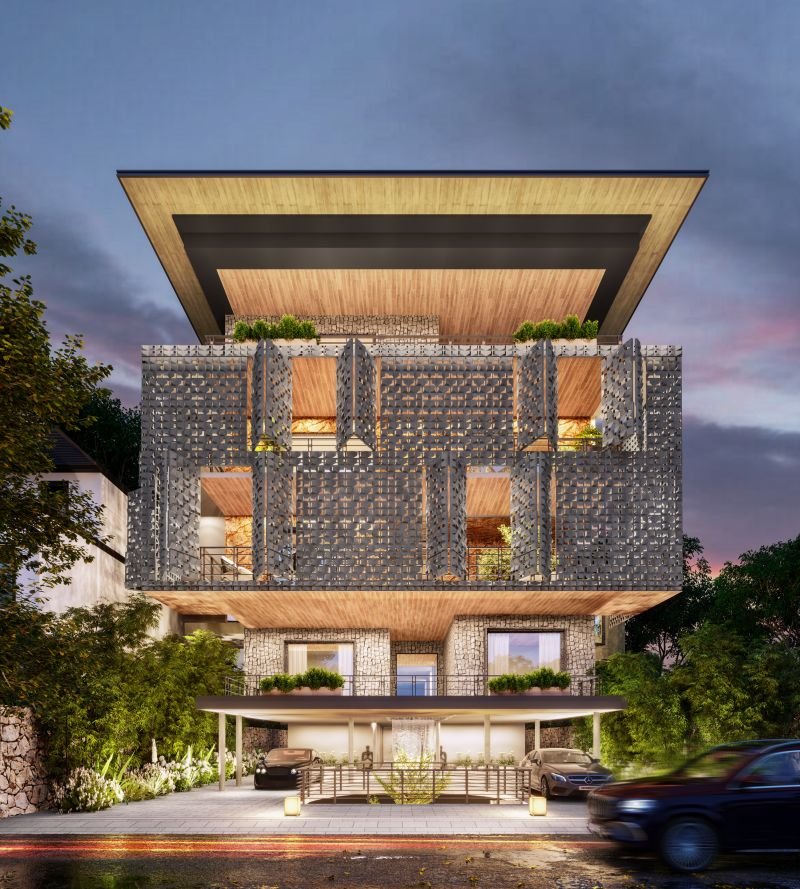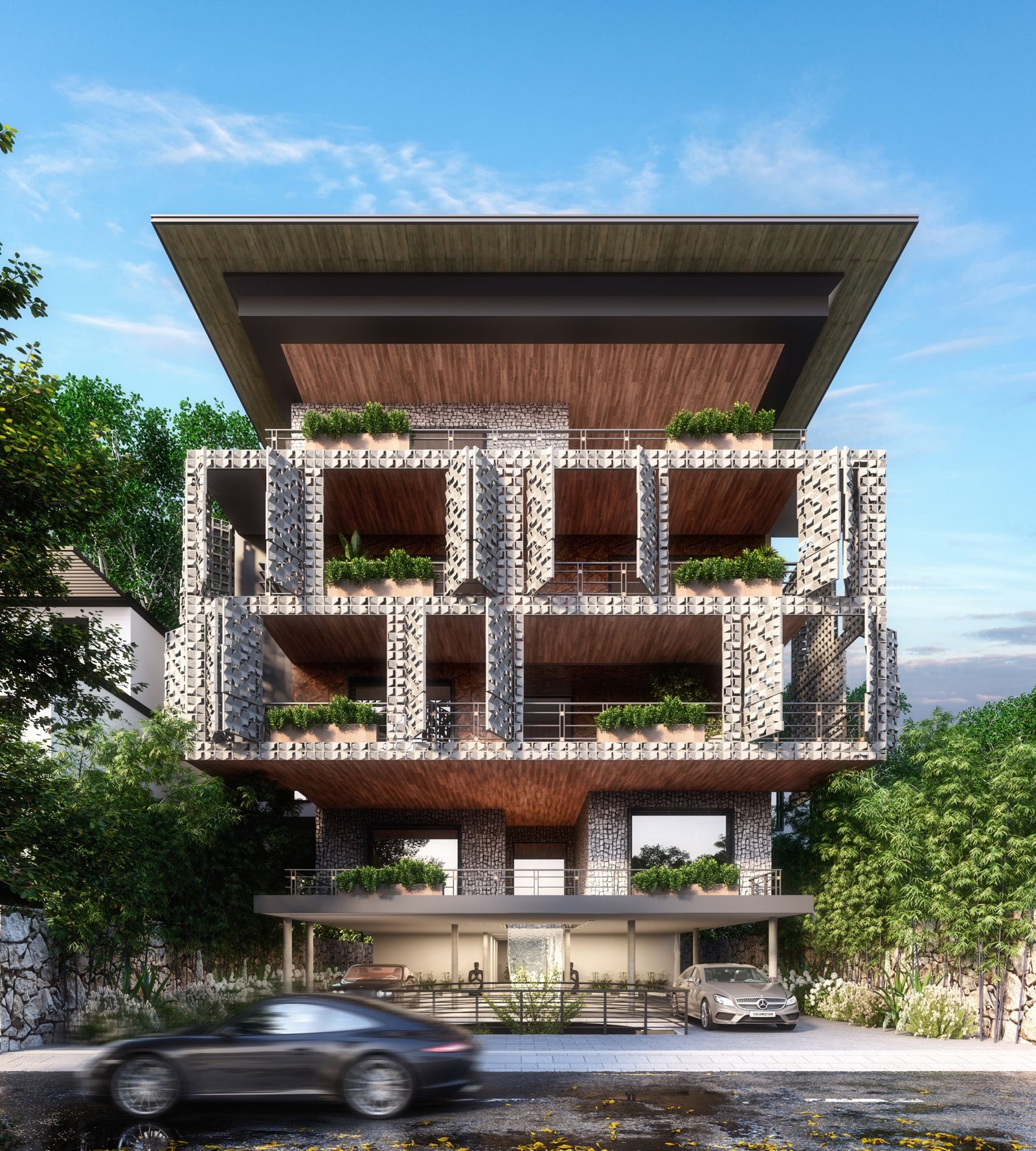
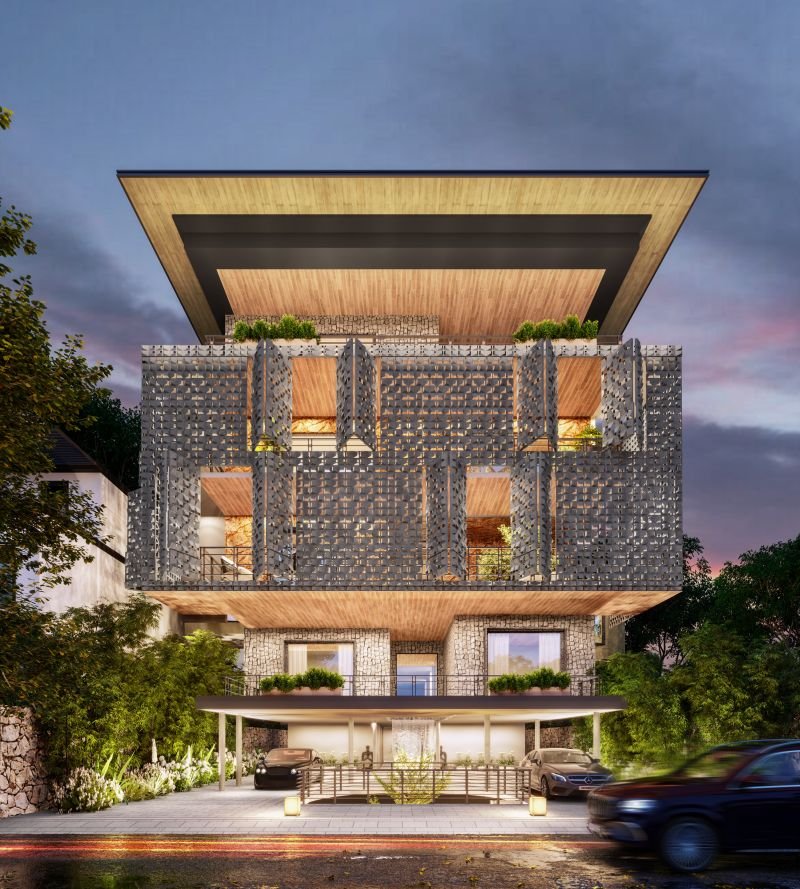
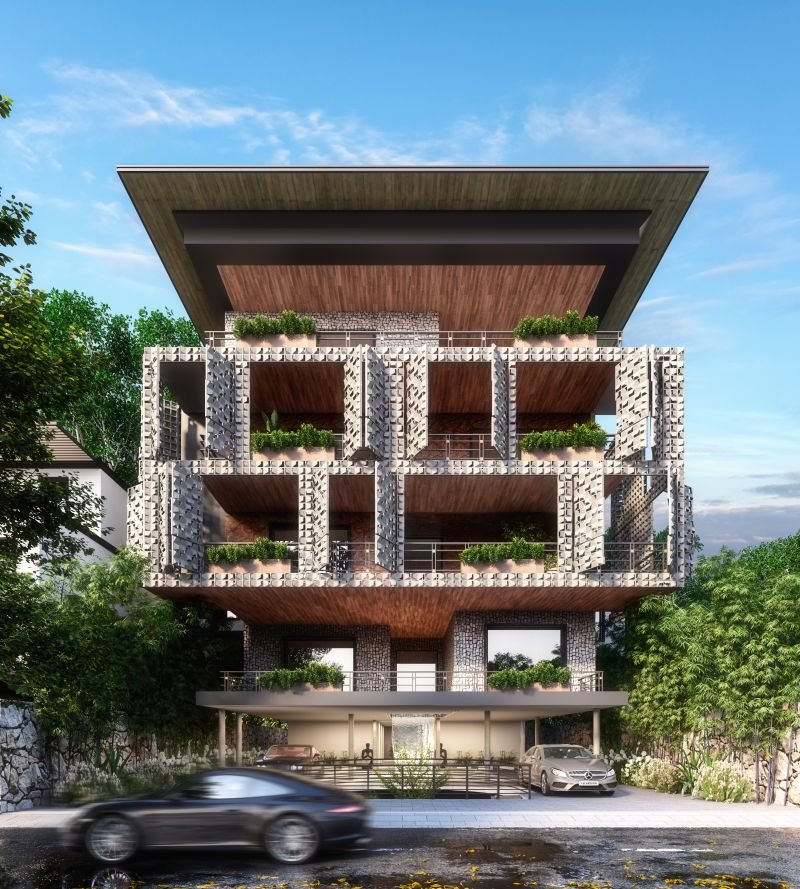
Some houses announce themselves through mass. This one announces itself through pattern, a residence in Suncity where the entire upper volume is wrapped in a shimmering, faceted metal screen that catches light differently at every hour of the day. By dusk it glows amber from within, each perforation lit like a lantern. By morning it reads as pure texture, a woven surface of stone toned tiles that softens the building’s geometry into something closer to fabric than facade.
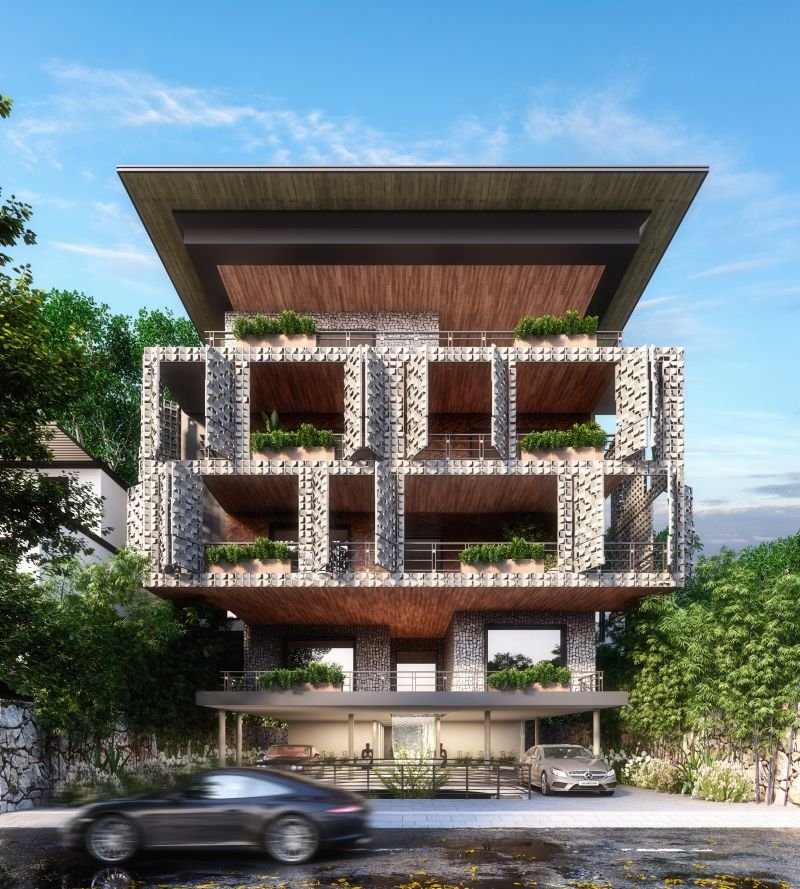
The composition begins with a dramatic gesture at roof level, a deep folded canopy in warm timber that projects outward at a sharp angle, its underside glowing gold against the evening sky. This canopy does not simply shelter the top floor. It frames it, creating a datum line beneath which the faceted screen wraps two full storeys, punctuated by tall vertical openings that let balconies and interior light spill through the pattern. Slender folding panels within this screen allow residents to adjust its porosity, opening toward the view or closing inward for privacy, an adaptive skin rather than a fixed one.
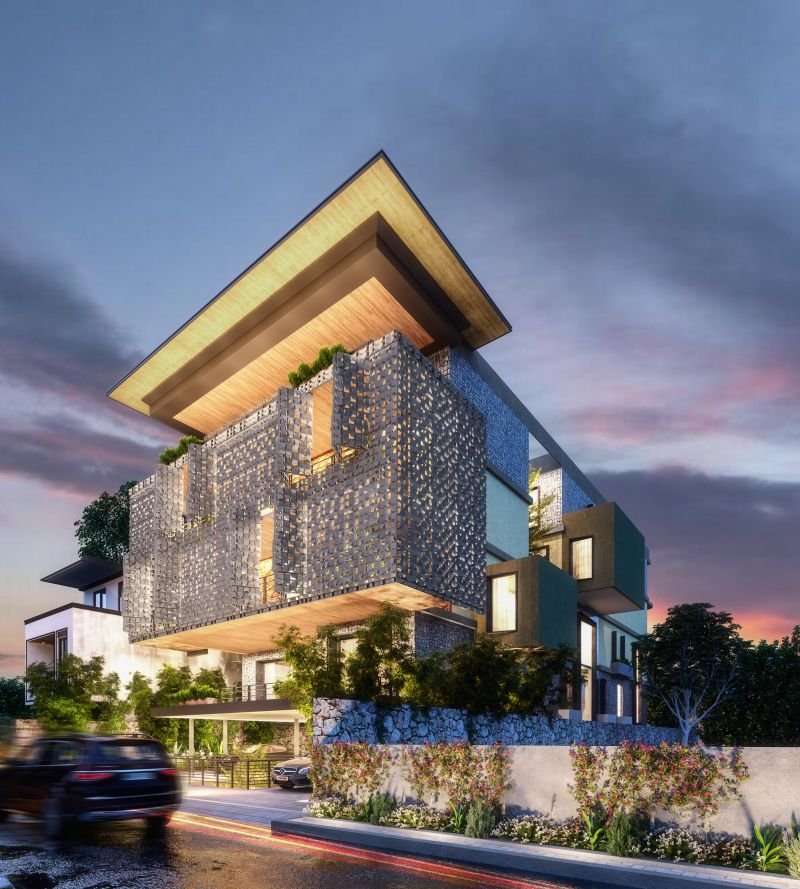
Below this luminous upper mass, the architecture shifts register entirely. Natural quarry finished stone cladding grounds the lower floors, its texture deliberately raw against the refined metalwork above, while sculpted volumes in charcoal and deep teal project outward at varying depths, catching light on their glazed faces. A cantilevered timber soffit separates these two languages cleanly, stone below and lattice above, so that the building reads as two distinct ideas held in careful balance.
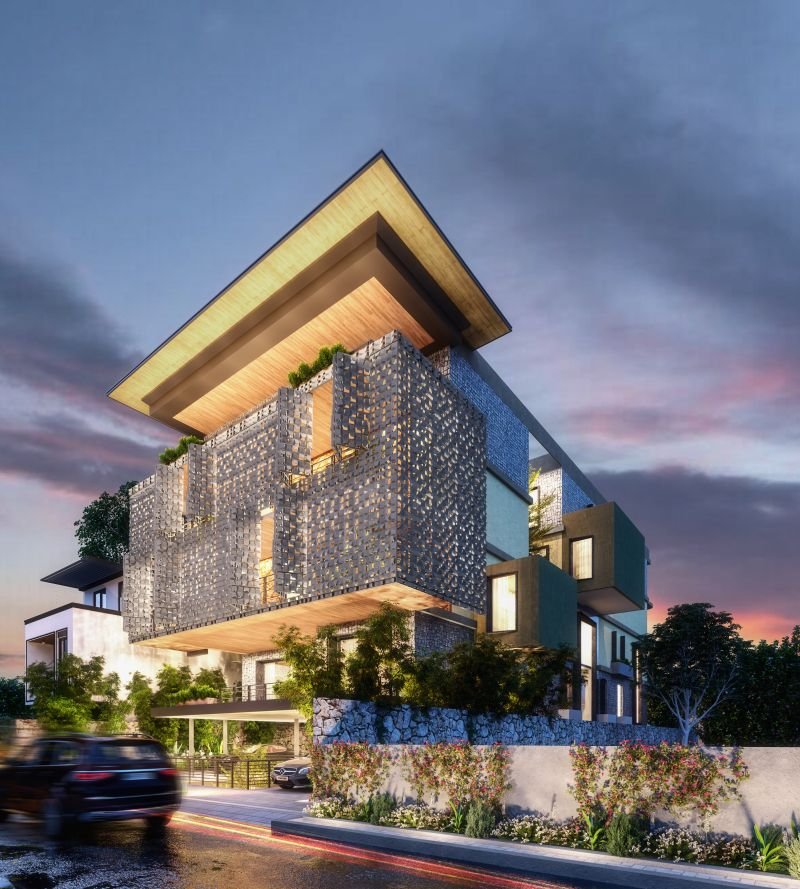
At ground level, the residence softens further still. A stone boundary wall dissolves into cascading bougainvillea, its blooms spilling over the base in bursts of pink and white, while an open carport tucked beneath the building’s cantilever offers shelter without enclosure. Landscaped beds line the entry sequence, blurring the edge between private garden and public street, and ensuring that even before arrival, the language of the architecture, textured, layered, alive, has already begun to unfold.
What makes Suncity distinct is its refusal to settle into a single material identity. Stone speaks to permanence. The faceted screen speaks to light and movement. Timber softens both. Together they form a residence that shifts in character across the day, solid and grounded by daylight, radiant and dematerialized after dark, always changing yet unmistakably whole.