The three-screen cinema at NCS Mall, Guwahati, presents a striking architectural premise for cinema design, emphasising spatial experience and materiality. The project showcases a design aesthetic that enhances the immersive entertainment environment for patrons, which is not limited to only movie-watching.
The most notable aspect of this project is its spatial organisation. In conventional theatre designs, foyers are typically positioned beneath the auditoriums. However, this venue inverts that arrangement. The foyer is elevated above the descending auditoriums, creating a spatial sequence that maintains consistent lobby heights—a significant achievement within the constraints of mall-based cinema architecture.
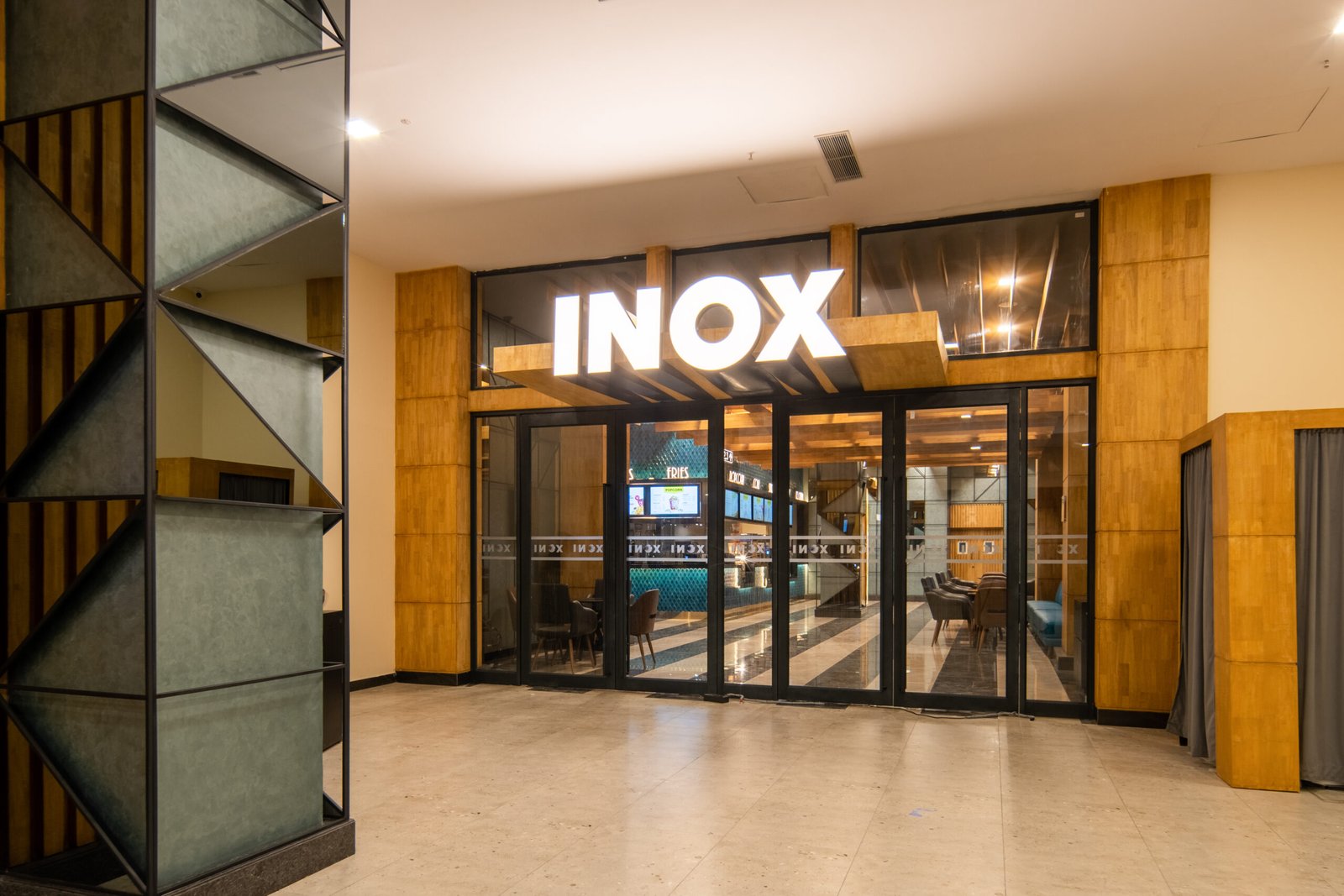
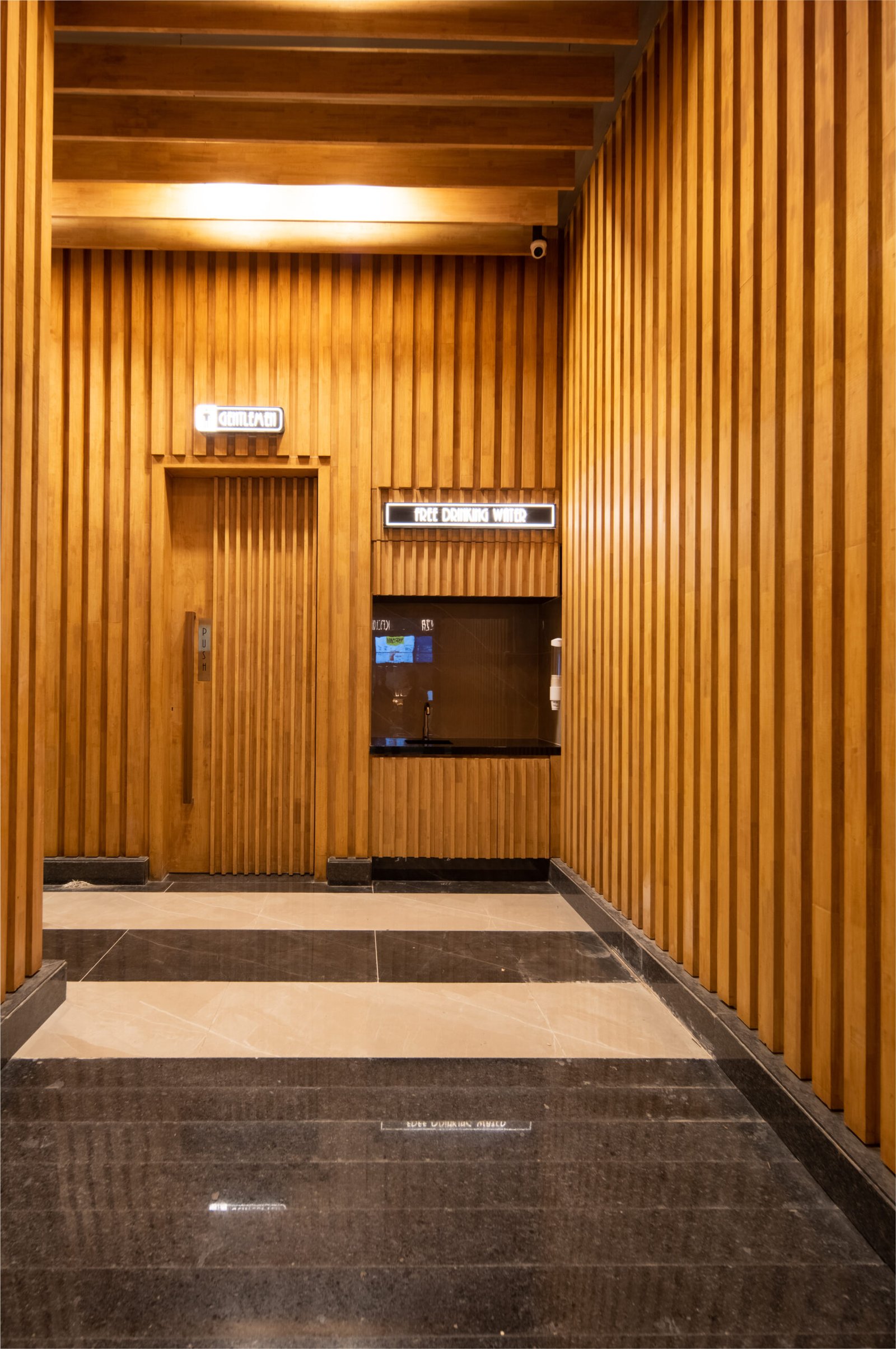
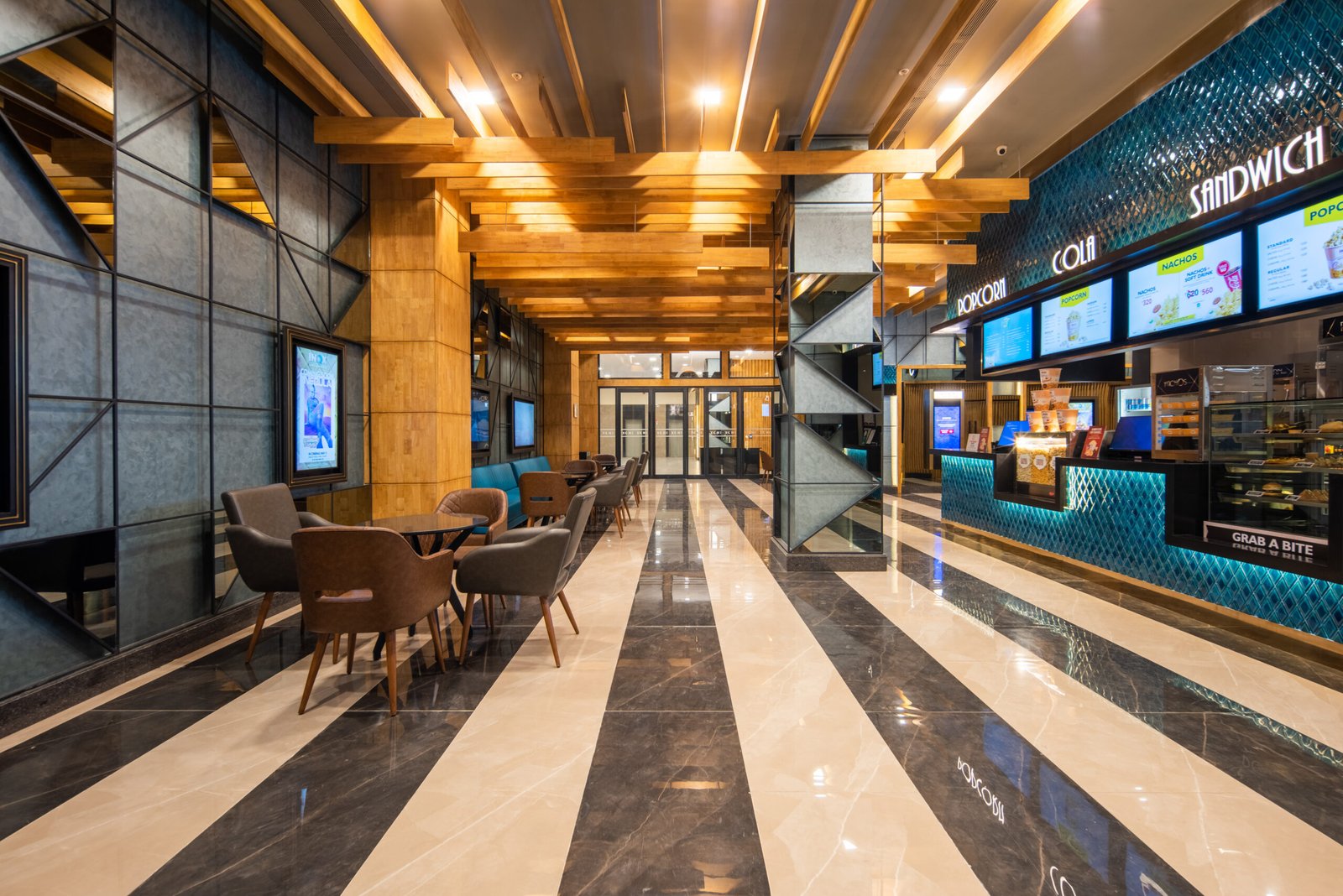
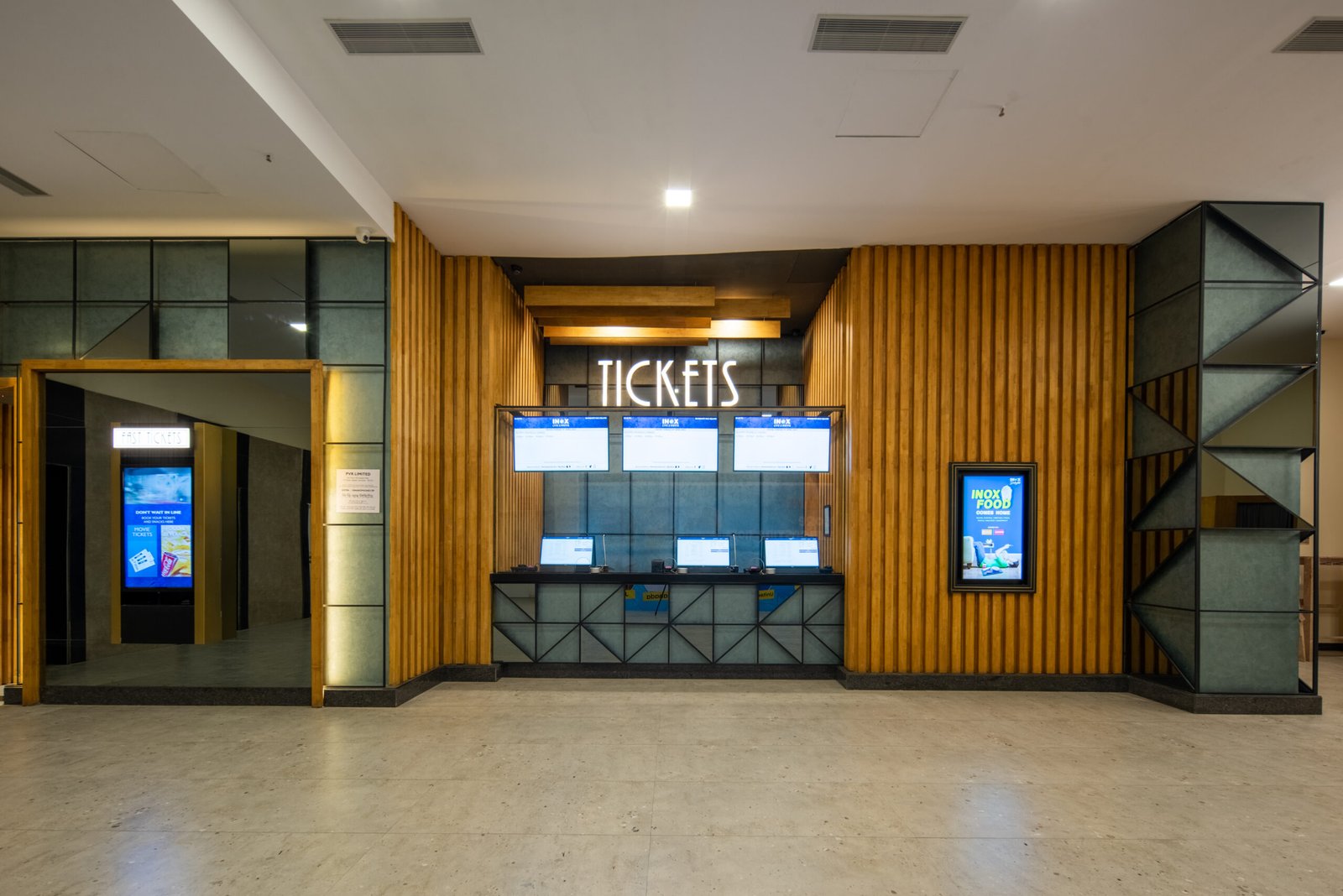
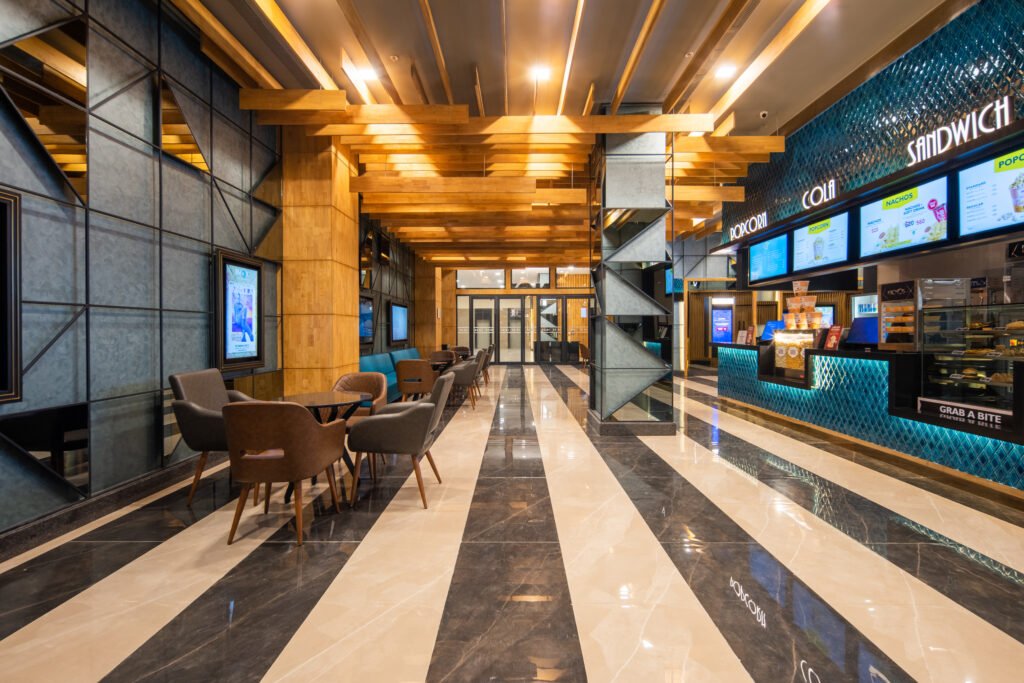
The material composition is a framework that balances aesthetics and functionality. The industrial aesthetic is tempered by the use of rubber wood rafters on walls and ceilings. Damascus texture paint harmonises with metal grills and strategically placed mirrors. Particularly noteworthy is the innovative treatment of metal frames, which are deliberately offset from wall surfaces. This detail prevents damage while introducing a subtle depth variation.
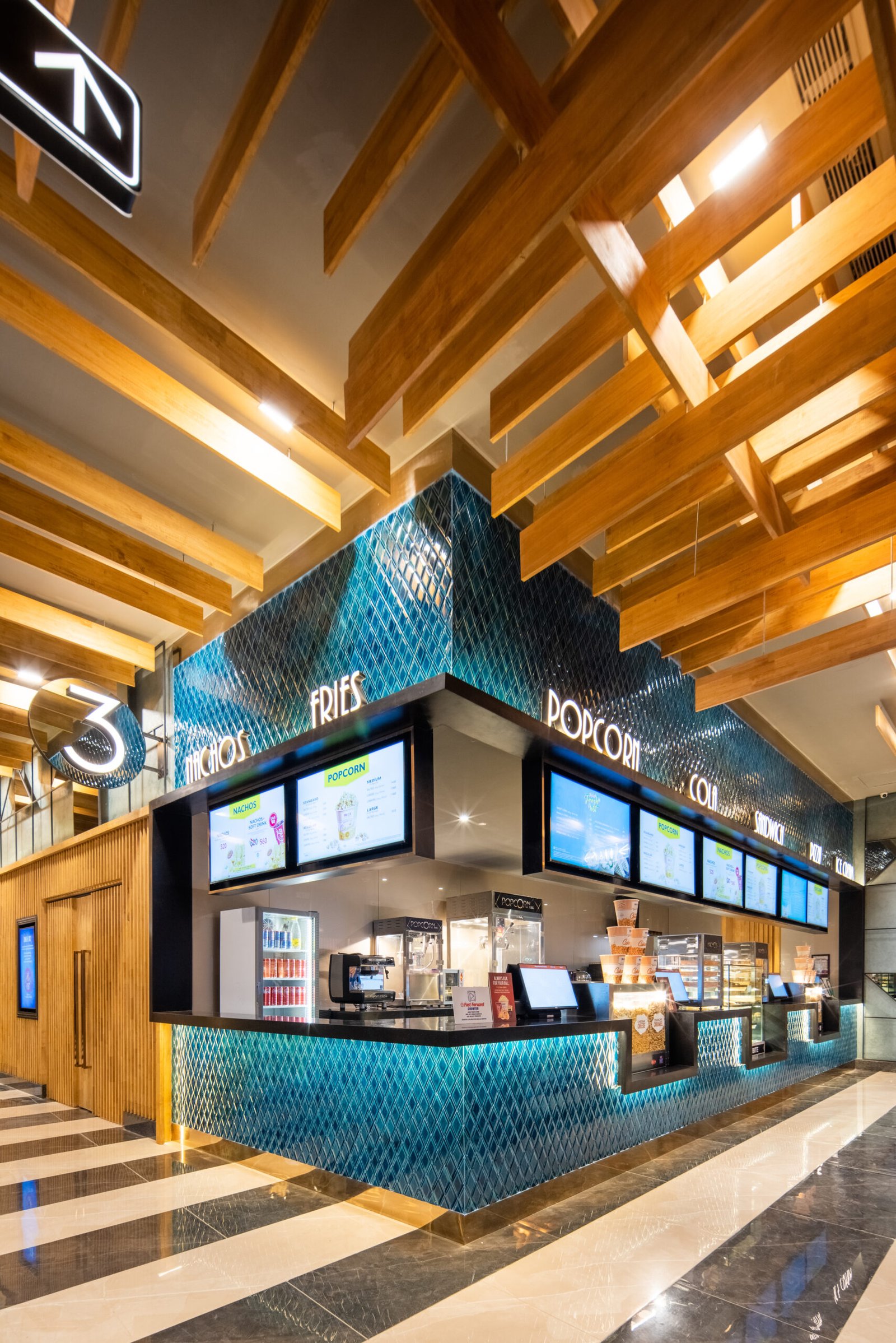
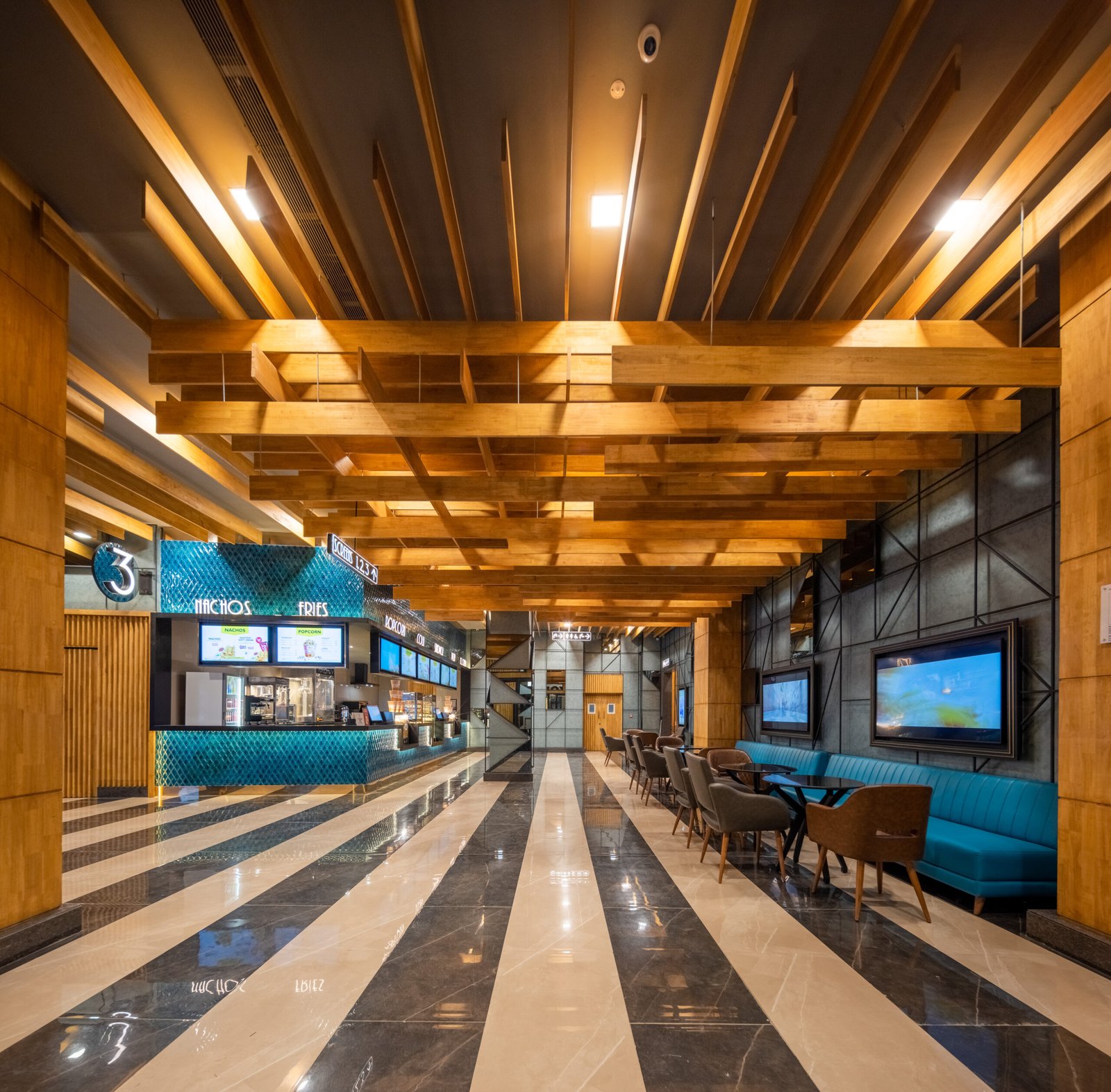
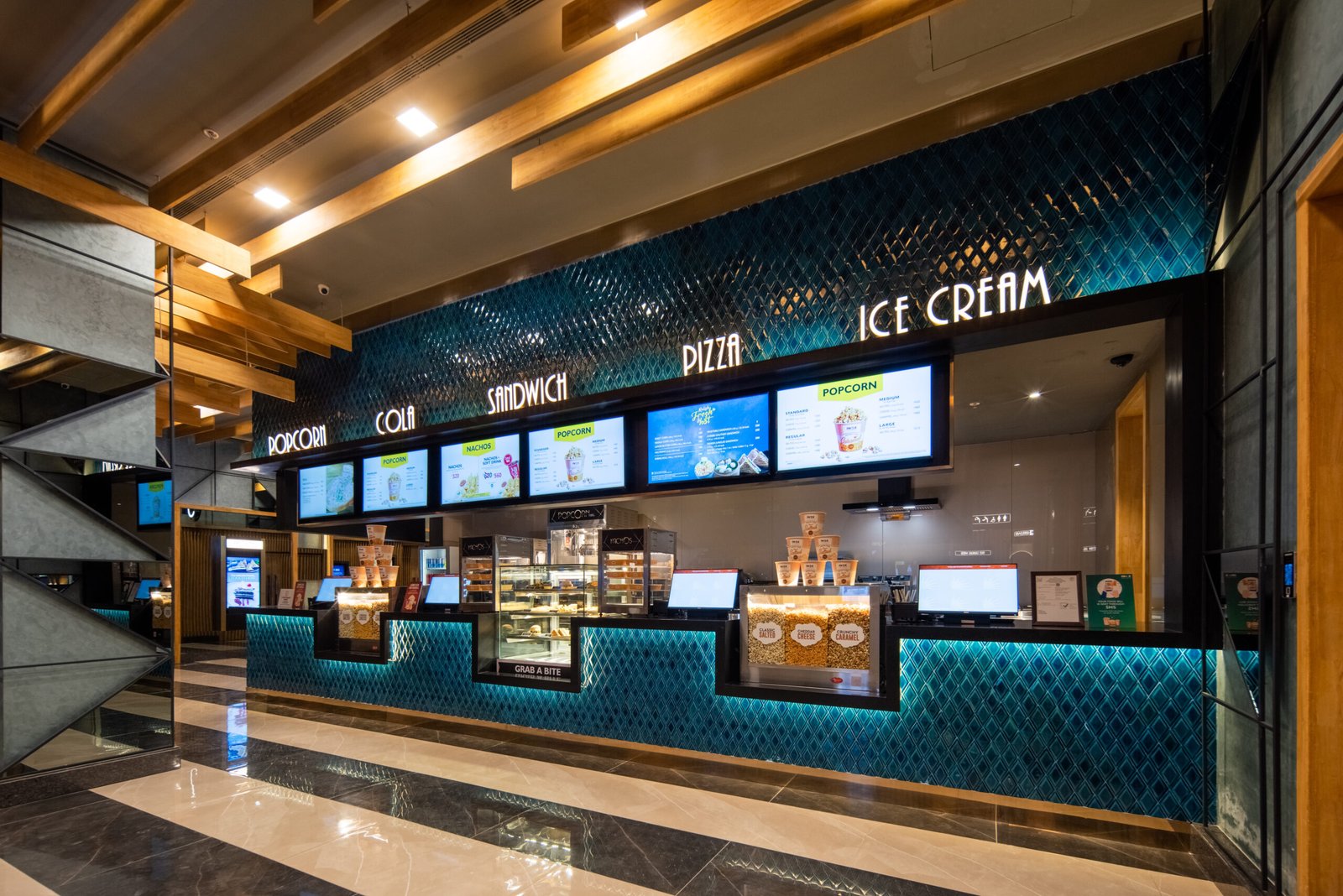
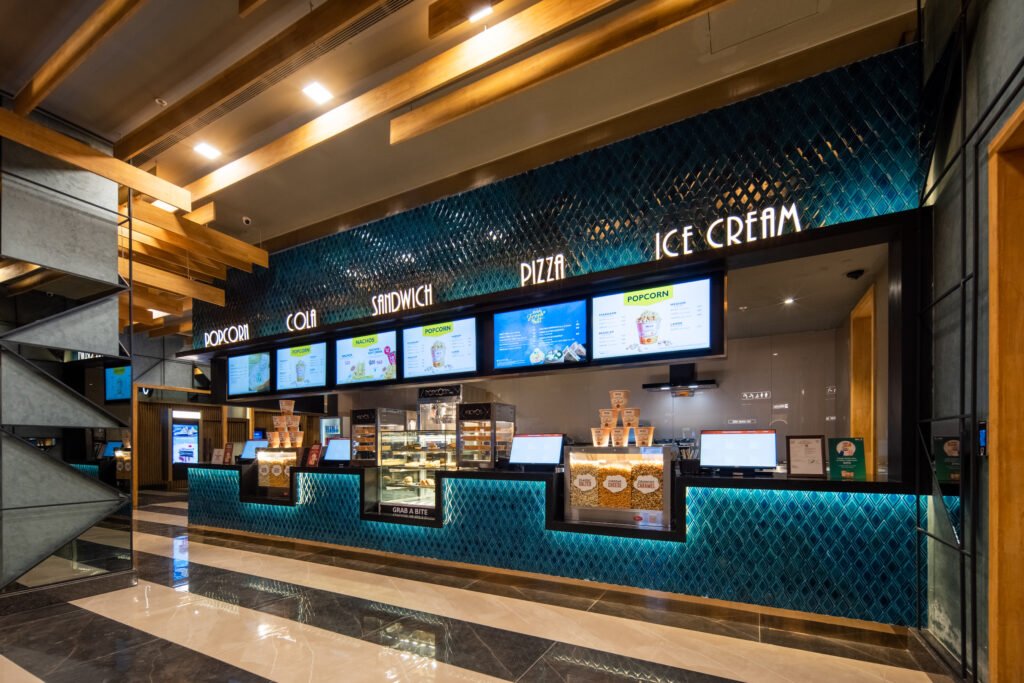
The concession counter emerges as the architectural focal point. This centrepiece features handmade teal blue tiles from Keramos, transforming a typically utilitarian space into a compelling visual anchor. Above, the ceiling offers an ambitious interpretation of traditional chandelier forms, with rubber wood rafters arranged in four perpendicular layers, adding sculptural drama to the space.
Materials are used as a circulation strategy. Patron movement is choreographed through the strategic placement of seating areas. The flooring continues this design narrative with complementary grey and beige striped tiles, seemingly guiding patron movement. Strategically placed seating areas further enhance this guided flow, creating an intuitive spatial experience.
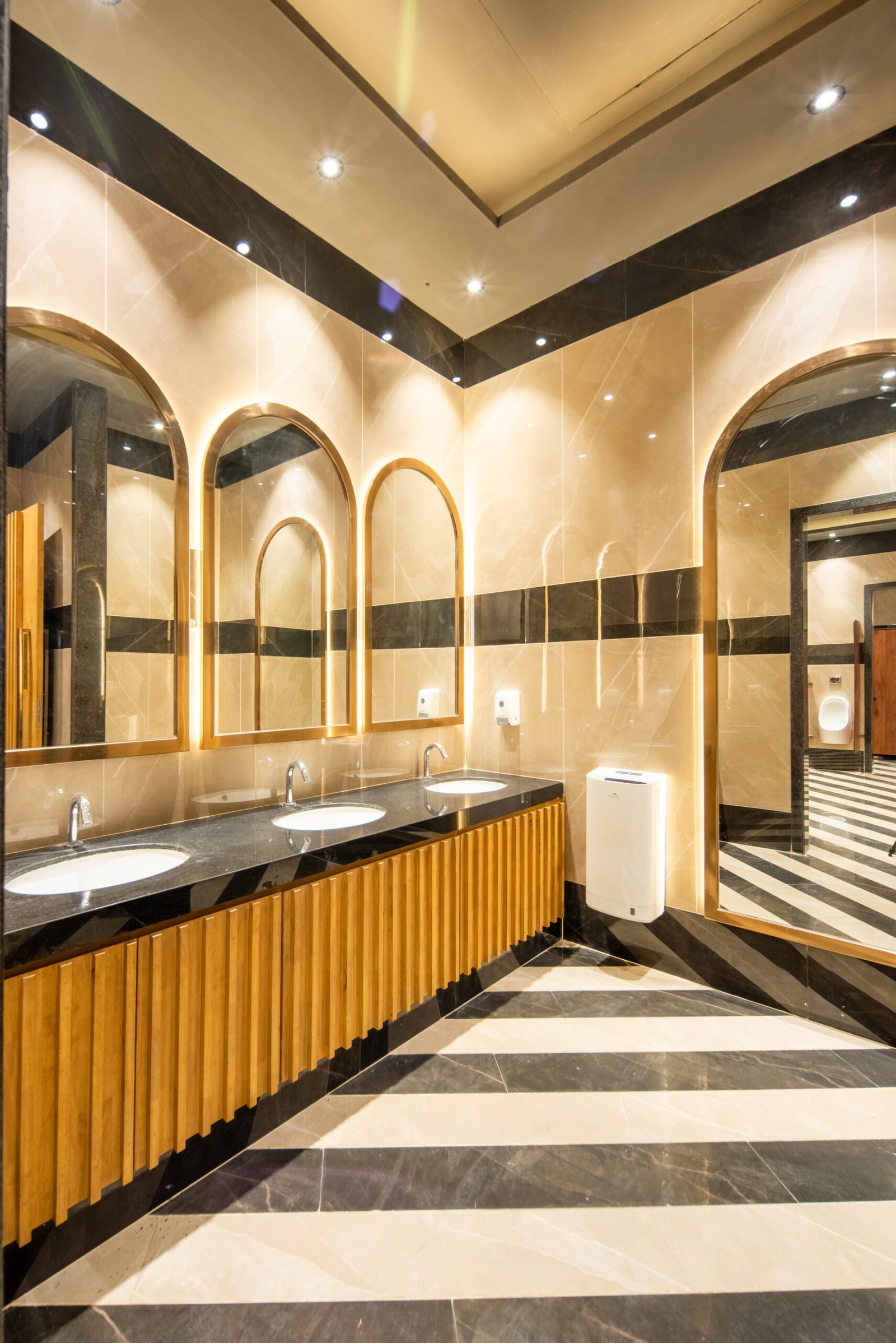
This practical consideration extends to the washroom spaces, which are positioned and designed to address the challenges of concentrated foot traffic.
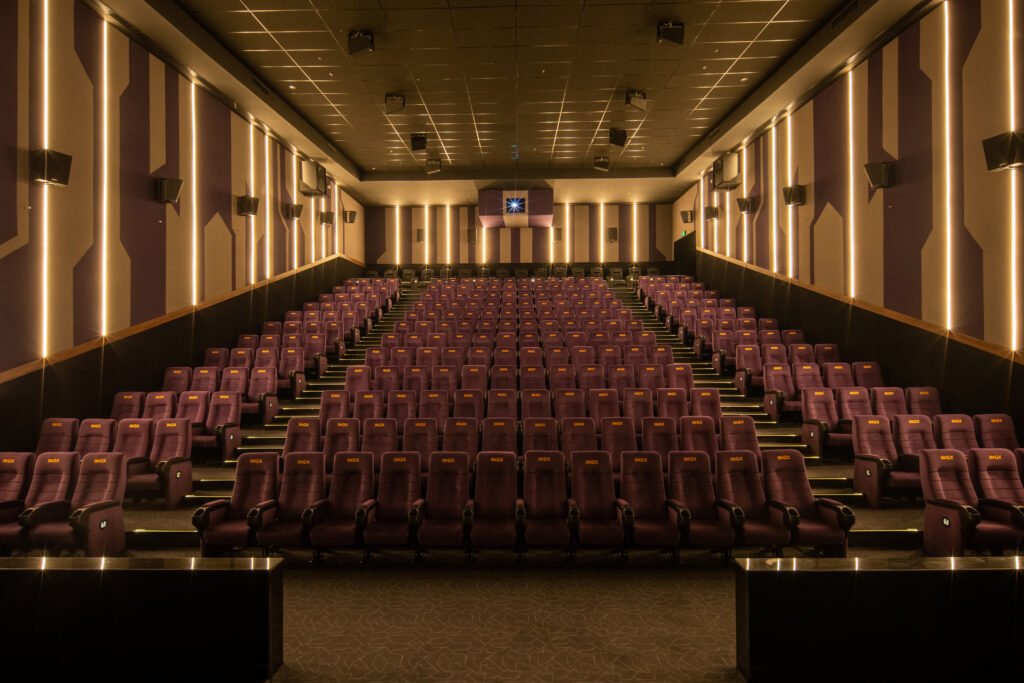
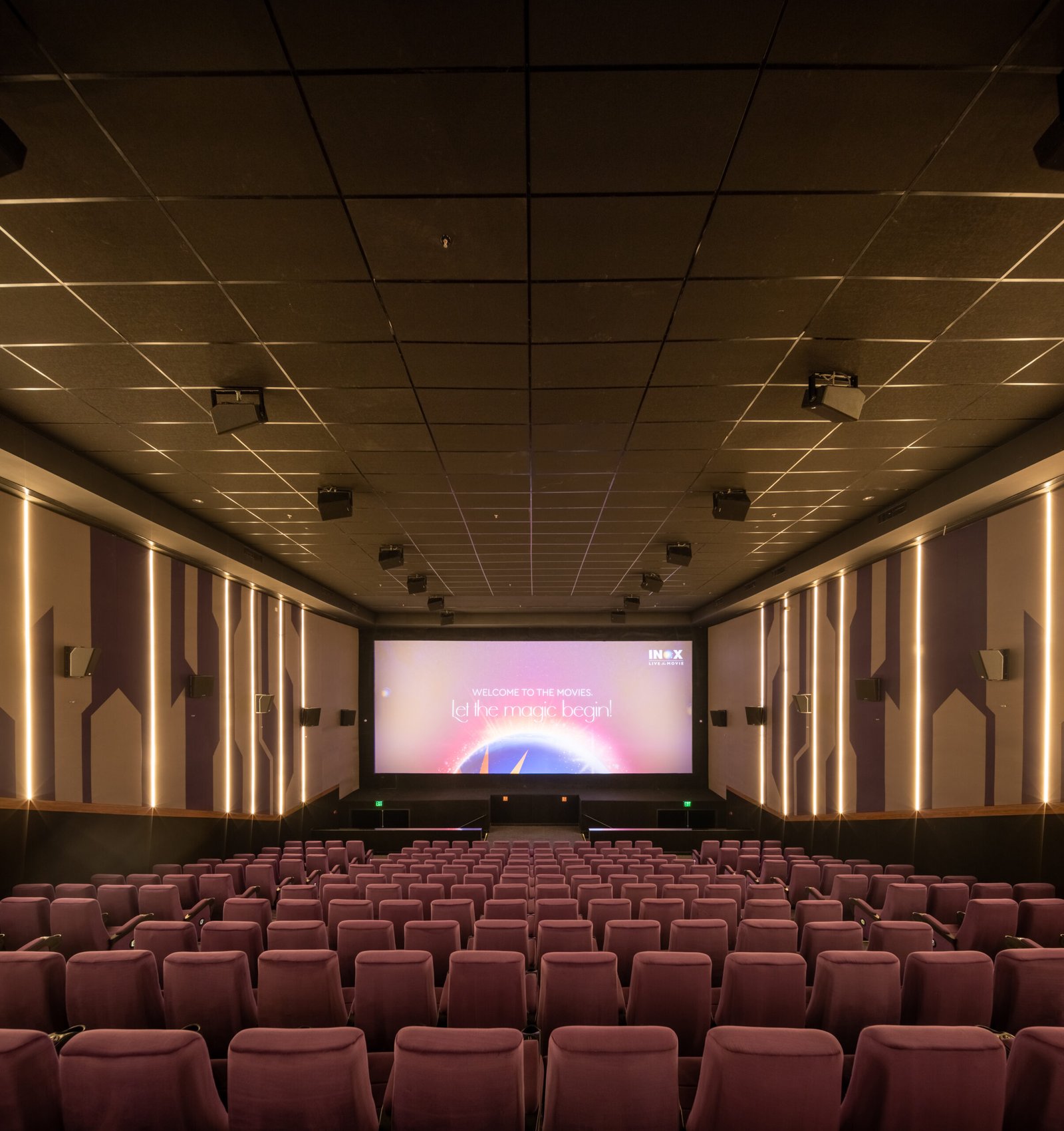
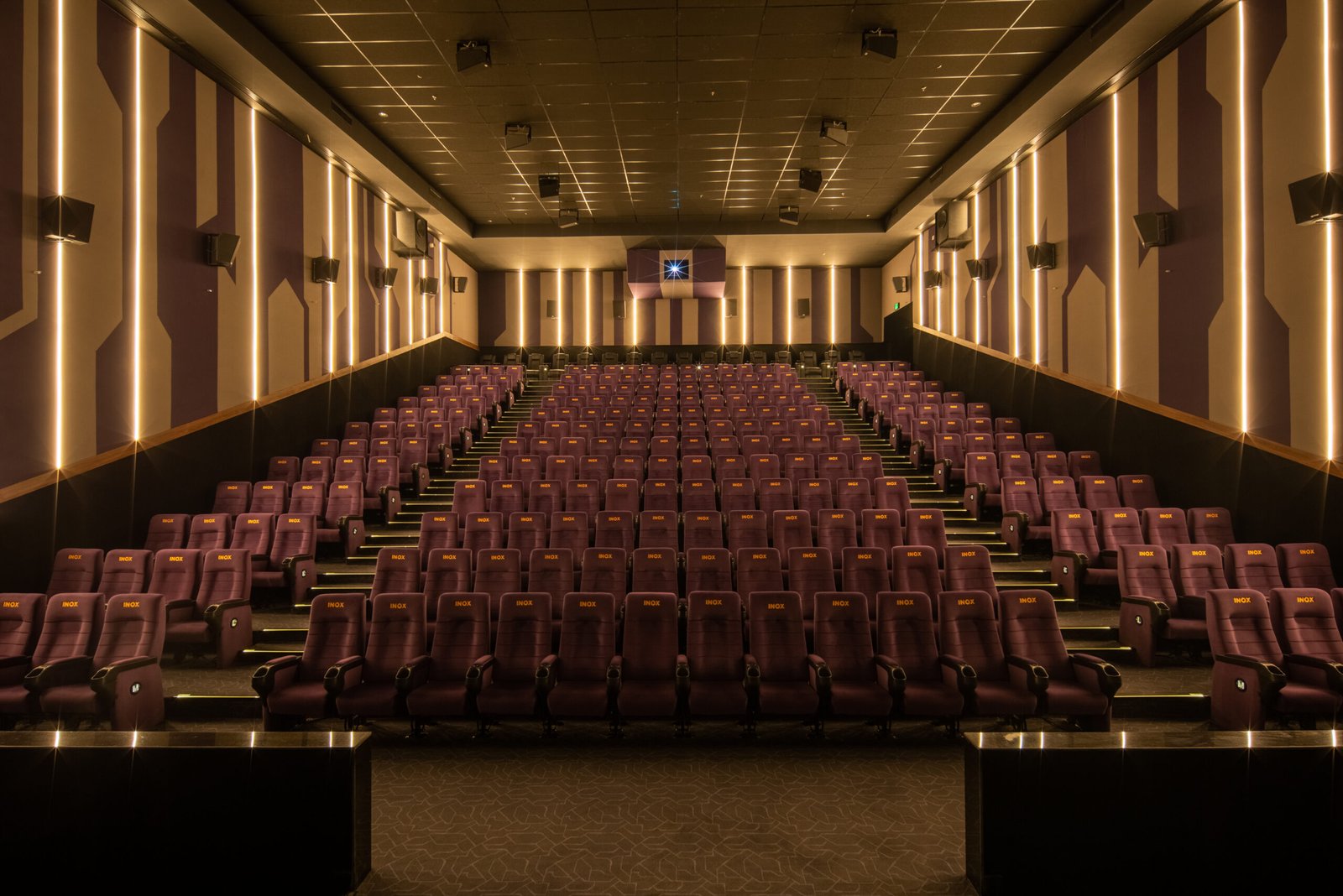
In the auditoriums, visual interest is created through multiple colour schemes, enhanced by linear lighting and dynamic fabric patterns. The ease-of-movement approach is maintained, with patrons entering from the rear and exiting at lower levels, creating a fluid movement pattern that enhances functionality.
The design incorporates advanced cinema technology throughout, from interactive displays housed within metal-frame poster boxes in the foyer to ceiling-mounted Atmos speakers.
Today, theatres have evolved into spaces for social engagement, going beyond a space that previously catered to only watching movies. PVR Inox is a design example that represents this evolution, engaging with both traditional theatrical functions and contemporary social needs within shopping mall environments.
In collaboration with Sync Design Studio